From Tokens to Tasks
I gave a lecture yesterday for Baruch’s MBA Club called From Tokens to Tasks. About 40 students were there, in person and remote. The lecture was part technical overview and part history lesson, covering, at a high level, tokens, transformers, RLHF, reasoning, tool use, and the agentic loop. I ended with a live demo that started with just a resume I’d made for Bernie the Bearcat, Baruch’s mascot, and ended with a deployed personal website about 20 minutes later. The website came out better than I expected, and Claude taking three tries to successfully deploy it was a good example of how these tools can brute force their way through almost anything for a project as simple as a personal website.
I designed the whole presentation around one sentence I wanted students to be able to say at the end: “I can do this, and I know enough about how it works to be confident using Claude Code.” Every slide and every part of the demo was designed to land that.
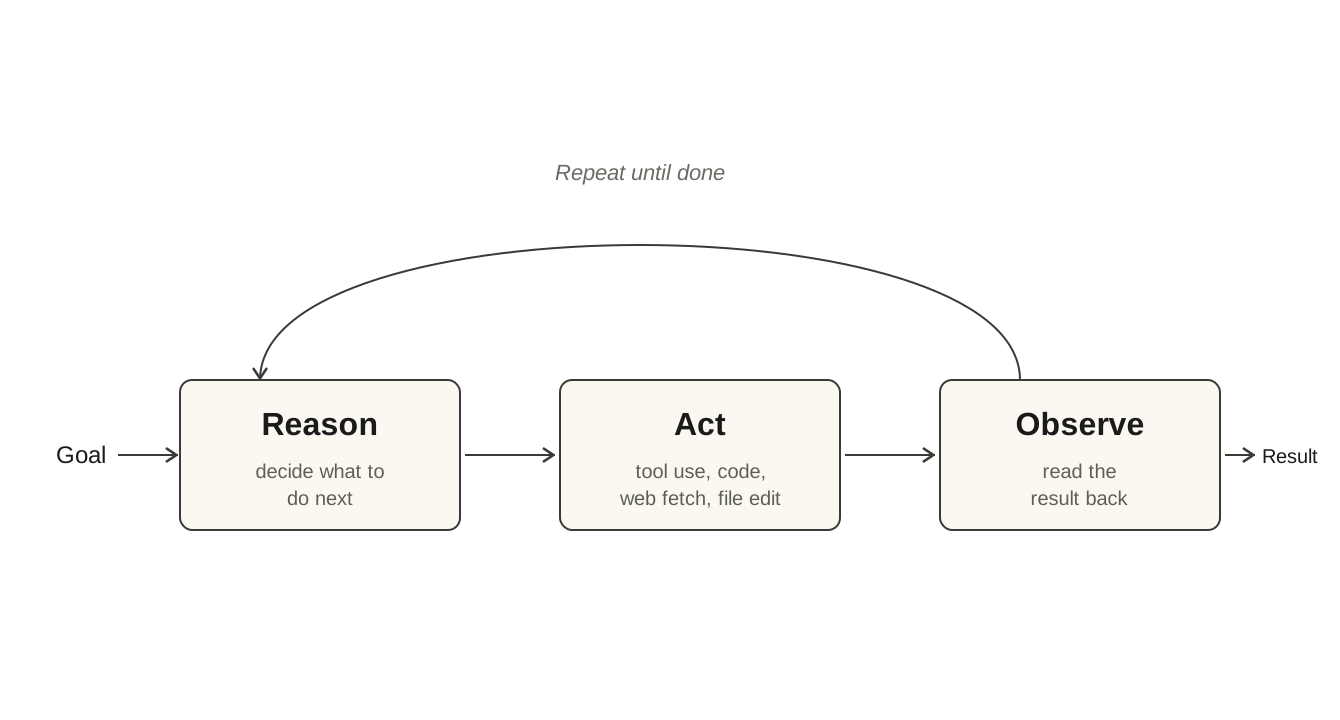
The bet was that the hard part of getting started with these tools isn’t technical. It’s the initial hurdle – not knowing what they actually are, what they can and can’t do, where they fit, whether you have the right background to use them. Once you’re past that, the rest is reps. The goal of a 50 minute lecture and a live demo isn’t expertise, but I’m expecting a handful of students to have new, live personal websites this weekend.
The framing I leaned on most for the opportunity created by agentic development tools was Boris Cherny’s printing press analogy. In 1450, about 1 in 50 people could read. The printing press didn’t invent literacy, it scaled it. If something similar happens with code – if writing software stops being a specialist activity and becomes something every professional can do – then the person best suited to write accounting software is an accountant, not a software engineer. The accountant has the domain context; the code is downstream of that. The same logic runs through any line of work an MBA might end up in.
That’s a different pitch than “AI is going to take your job,” and it’s one MBAs can actually act on. You’re the domain expert in your own work, and the thing you’ve been waiting on engineering for is suddenly something you can prototype yourself. We discussed some other examples of projects that would be good for students to work on. For the live demo, since every MBA student is always practicing their self promotion, working on a personal website was an obvious choice.
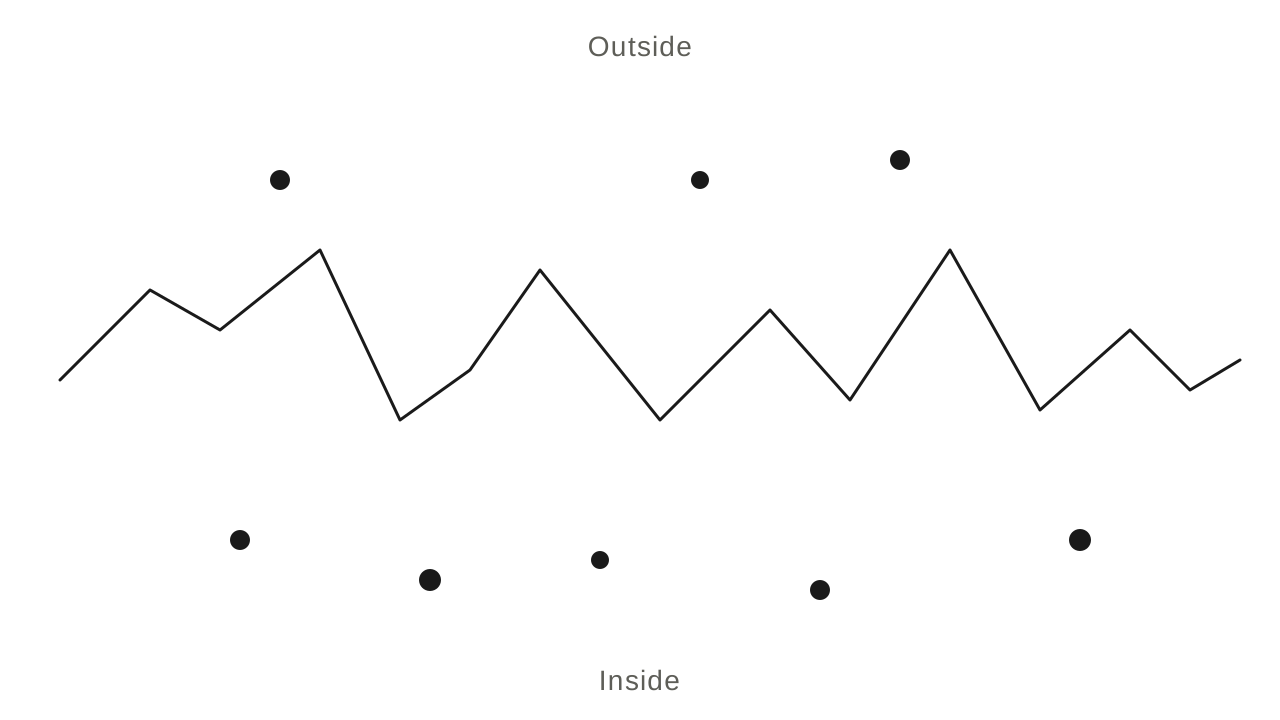
The questions are always interesting. While Claude was thinking, there were some questions from students that were actually very similar to conversations or debates I’ve had with software engineer friends and coworkers. Things like trying to better understand the jagged frontier (where’s the line between when to use it and when not to), how to be frugal with tokens (my answer: don’t, be frugal with your time but if you’re solving an important problem you want to maximize test-time compute), and comparing Claude to other models like Codex or debating when to use Opus vs. Sonnet. The pattern across the questions was that students were already past the “is this real” stage and into “how do I actually use this in my work,” and the similarity in topics between questions from students who are new to agentic development and debates I have had with software engineers really showed how early we are.
Overall, I think the presentation was a success. I’ll be incorporating aspects of it into my refreshed curriculum for CIS 9000 (IT Strategy) in the fall – the reading list behind the course is up on my bookshelf. One of the joys of teaching right now though – who knows what additional developments I’ll need to figure out how to address by the time the fall semester starts.
If you’ve used ChatGPT and haven’t opened Claude Code yet, an hour with it this week is probably worth more than another 50 minute lecture about it. Check out the slides and the site we built below.